Discovering Psilocybin – Lucie’s Story

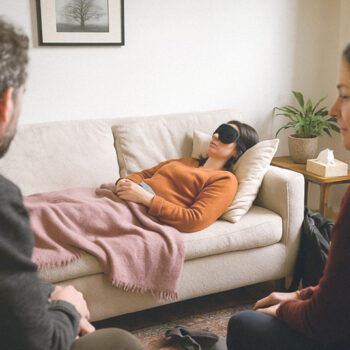
Journalist Lucie Dubois recently experienced the effects of psilocybin truffles at Tangerine Retreat, a psychedelic retreat center in the Netherlands. She recounts her journey in “Rendre visible l’âme”, an article published in Cerveau et Santé magazine.
“Studies suggest that this psychedelic substance, which appears to reactivate the brain’s plasticity, may have therapeutic potential for certain forms of anxiety and depression – and may help reopen a sense of possibility.
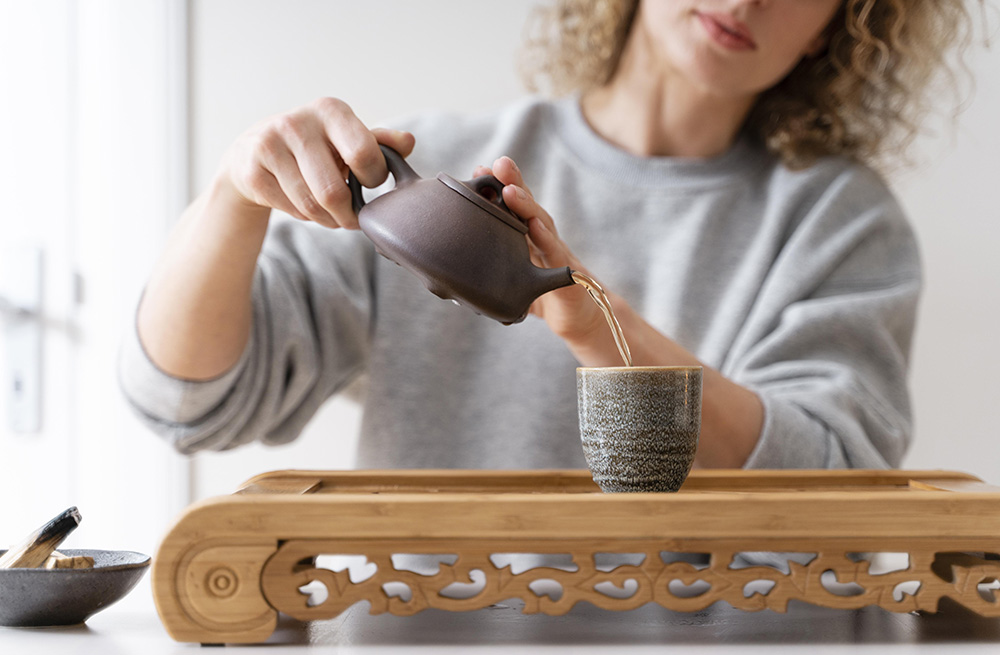
Sitting in front of my cup of white tea, in which 20 mg of psilocybin truffles are dissolving, I feel a slight dizziness rise through me: a mixture of apprehension and curiosity. ‘Let go of your expectations. The medicine will do what it needs to do,’ one of the facilitators told us earlier. Easier said than done. The path that brought me here has already shaken many of my certainties, fueled by the hope of finally emerging from the burnout that drained me for much of the year.
A few months earlier, a Michael Pollan documentary on the scientific renaissance of psychedelics had sparked my curiosity. I had followed the ongoing research with interest, but I was far from imagining that I would one day become part of the experience myself.

In just a few years, these substances have moved from taboo to clinical protocols. Studies conducted in the United States and the United Kingdom suggest that one or two supervised sessions can help relieve depression, anxiety and some forms of addiction. MDMA-assisted therapy has shown promise in treating certain forms of post-traumatic stress; psilocybin has, in some cases, produced results comparable to antidepressants. These findings point towards a central hypothesis: psychedelics may reactivate brain plasticity, temporarily reopening ‘windows of learning’ once thought to be closed in adulthood. According to psychiatrist Bessel van der Kolk, if these results are confirmed, they could represent one of the major breakthroughs in modern psychiatry.
Meanwhile, my own life was beginning to crumble. A situation of workplace harassment eventually pushed me into burnout.
I had always thought of myself as resilient under stress, supported by years of meditation and yoga. Yet, one morning I woke up with a crushing sensation in my chest and a state of constant hypervigilance. Rapid professional support helped me recover, but once I returned to the same organization and faced the same harasser, a quiet anxiety remained: what if it all started again?
Revisiting one’s life?
That was when I began thinking again about psychedelic therapies. Could such an experience be reparative? Could it not only unlock what chronic stress had frozen inside me, but also allow me to revisit the harassment from another angle, with a calmer perspective?
My research led me to Tangerine Retreat, where psilocybin truffles – legally available in the Netherlands – are used within a carefully structured framework: medical questionnaires, personal intentions, individual and group preparation sessions. These moments of exchange form an essential first phase. They create cohesion, build trust and gently begin the work of introspection.
Three facilitators – Magalie, Mourad and Jakobien – supported by a doctor, hold the space and attend to the psychological safety of the group.
‘The medical set-up is there to reassure people. We have never had to intervene,’ explains Arnaud Beauregard, a graduate engineer of École Polytechnique, who founded the retreat after his own personal discovery of the benefits of this experience.
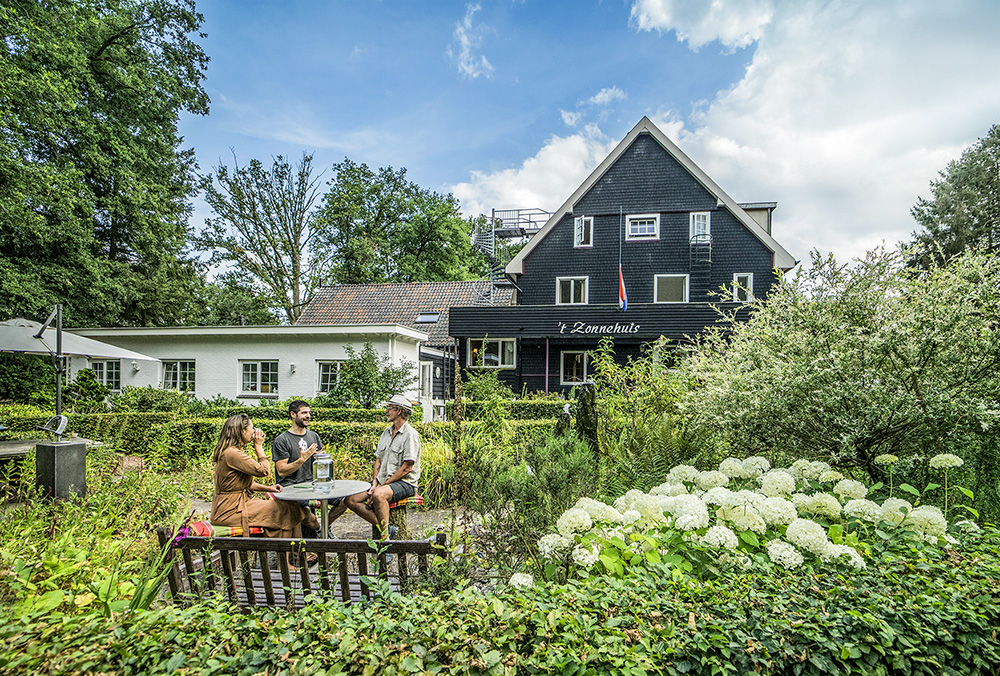
The ceremony takes place in a large country house, surrounded by trees and silence. It is an ideal setting for what researchers call set and setting: a soothing environment that helps prepare the mind to open.
What the studies show
- In the United States, several clinical trials conducted at Johns Hopkins and NYU have shown that one or two psilocybin sessions, combined with psychotherapy, may lead to lasting reductions in treatment-resistant depression, cancer-related anxiety and certain addictive disorders.
- In a 2022 study published in JAMA Psychiatry, participants treated for alcohol use disorder reduced their heavy drinking days by nearly 60% – a result superior to most existing treatments.
- In the United Kingdom, the Centre for Psychedelic Research at Imperial College London compared psilocybin with a standard antidepressant. The result: two doses, administered with therapeutic support, produced effects comparable to six weeks of escitalopram, a commonly prescribed antidepressant.
- In the United States, MAPS published phase III trial results in Nature Medicine on MDMA-assisted therapy, showing significant improvement in post-traumatic stress symptoms, particularly among veterans. These studies may pave the way for future approval by US health authorities.
A unique experience
There are ten of us, from different countries and generations, aged between 32 and 69. Each person arrives with an intention, some more urgent than others. Some are seeking deep relief from depression or addiction. Others hope to understand themselves better in order to set their lives in motion again. Only Luna, 33, has experienced a session before.
“The first time, I stopped smoking… and I realized that the man I was seeing was the right one. We’re married now,” she tells us. She naturally becomes our psychedelic ‘big sister’.
Then comes the tea [ceremony]. Until now, the weekend has been paced by meditation, breathwork, individual sessions and group sharing. Suddenly, everything narrows into a single gesture: lifting the cup to my lips. I swallow the bitter liquid in one go.
Fifteen, maybe twenty minutes later, colors begin dancing in front of my eyes in a kaleidoscopic whirl that is too bright, too fast. A violent wave of nausea rises through me, followed by an icy cold that seems to come from deep inside. I curl up, repeating to myself: ‘It will pass.’
‘Fantastic,’ a corner of my brain remarks. ‘So I came all the way here to learn that harassment is unpleasant but temporary?’
My inner humor reassures me: I am still here, somewhere. Time becomes elastic. Everything feels blurred; reality is uncertain. Then Nour’s voice rises beside me:
–‘But where am I? And why are all the parts of me scattered everywhere?
–You are at Tangerine,’ Magalie replies. ‘I’m here. Everything is okay.’
Later, Nour tells me that she felt as though she had exploded into a thousand pieces and was trying to gather herself back together. It is not insignificant: her initial intention had been ‘to learn how to take her place in the world’.
Mourad comes over and offers me a little more tea. ‘Impossible. I feel far too sick.’
He brings me a piece of fresh ginger to chew. The taste hits me violently, almost aggressively, but it brings me back. Then he brings me a blanket. ‘Maybe this cold is trying to tell you something,’ he suggests.
My body begins to warm up. The visions slow down. The real work begins. I revisit whole stretches of my life as if following a thread backwards: the birth of my son, the bullying he suffered at school, my own harassment. I feel both patient and therapist, observant and observed. Then, suddenly, a flash of insight: his suffering had brought me back to him. At the time, I had stopped working so I could be with him every lunchtime and afternoon. Precious moments, just the two of us. My own ordeal, now, was forcing me to look directly at a prestigious job that had become empty of meaning. The introspection continues, dense and layered. So I will not forget, I took a few notes, scribbled blindly.
‘Tell my husband we are in a horizontal relationship.’
An enigmatic sentence, but one that feels urgent enough for me to call over a facilitator and ask him to remind me of it later. Once the effects fade, however, its meaning escapes me completely.
‘It will come back during integration,’ Mourad tells me gently.
Around me, the others are traveling too. Phil laughs, transported: ‘I found my ten-year-old self again!’
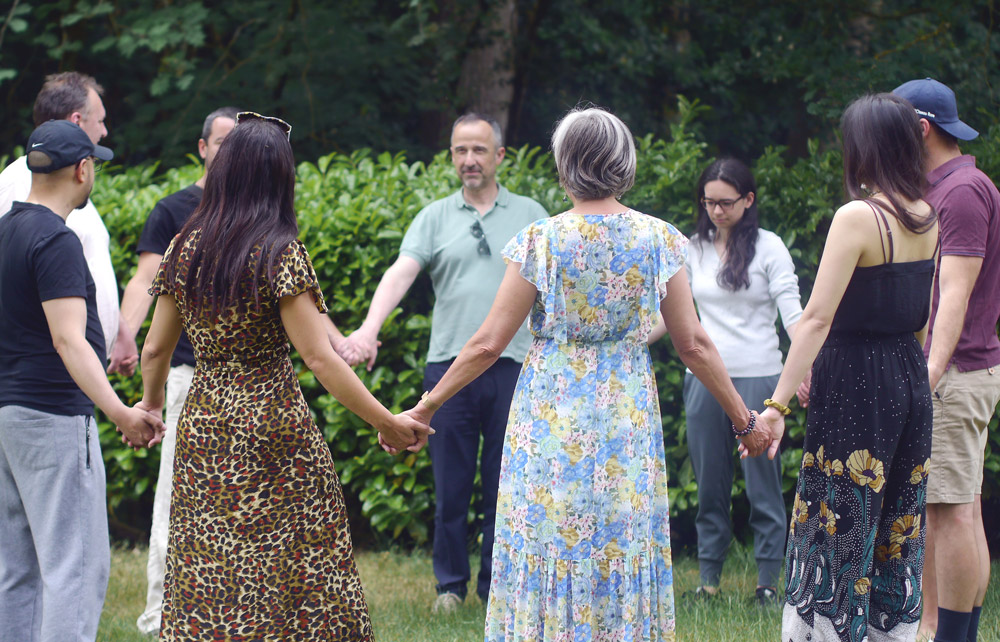
A few days later, he tells us that his creativity has returned – a welcome gift for this man in his fifties, who has been questioning the next phase of his professional life. Claudia, meanwhile, cries for a long time. Later, she describes the presence of something ‘greater than herself’ – a transformative experience documented in around 10 to 15% of sessions. As early as the 1960s, the first studies, including Harvard’s ‘Good Friday Experiment’, had already shown that such spiritual episodes could rank among the most meaningful moments of a person’s life, and could play an important role in reducing end-of-life anxiety.
Isabelle and Nathalie emerge disappointed. Isabelle felt almost nothing. Nathalie, who was lying to my right during the ceremony, says she has no memory of what happened. Yet I heard her crying for a long time, speaking of the pain of a world that no longer made sense. ‘It’s as though something had popped,’ Mourad explains to her.
‘Sometimes it is too intense to be integrated all at once. Don’t worry: the ceremony is just the beginning. The essential work happens now, during integration.’
Process of integration
And indeed, the hours and days that follow are perhaps the most important part of the process. We are encouraged to speak about our experiences with therapists, and to observe what begins to replay itself in our lives. ‘Notice the synchronicities, explore the connections,’ the facilitators recommend. The skeptical part of me smiles. It seems a little too easy; one could interpret almost anything that happens afterwards as a sign, or as a delayed effect of the retreat. And yet, something in me also knows they are right. Invisible threads were woven during the journey, and it will take time to understand what they mean.
The program includes monthly follow-up sessions for twelve months: a series of integration meetings designed to revisit insights and observe what is truly transforming. This feels like a necessary precaution. In this kind of experience, the main risk is not so much losing one’s footing as not knowing what to do with what has been revealed.
Back home, nothing seems to have changed – and yet everything feels slightly shifted. It is not a revelation, nor even a cure. More like a decompression. I feel a little more flexible, a little less tightly gripped by my fears and roles. As the days pass, the effects continue to evolve. Some emotions resurface; others settle. I often think back to Mourad’s words: ‘The ceremony is just the first step.’ The experience continues to unfold slowly, through daily gestures, through the way I listen, breathe and respond. It is not so much the world that has changed, but the way I am present within it.
As I write these lines, I realize that this journey is not exotic at all. It speaks to a universal need: the need to bring movement back to what had become frozen inside us. Perhaps that is, in the end, the true meaning of the word psychedelic: to make the soul visible, if only for a moment, so that we may move forward in a slightly clearer world.”
Like Lucie, if you feel called to listen to your inner self in a safe and carefully held space, you can join one of our psychedelic retreats.
Do you have questions about psilocybin or Tangerine Retreat?
Book a free call with one of our facilitators.
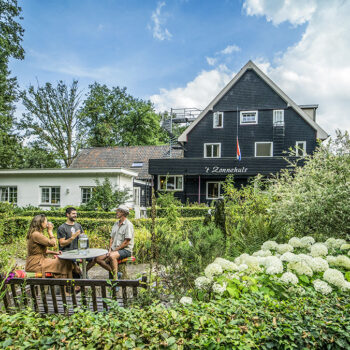
Psychedelic Retreat in the Netherlands
From 21 to 23 Nov. 2026
- Language(s) spoken:

- Guided psilocybin ceremony
- Presence of a GP or nurse during ceremonies
- Individual preparation sessions
- Shared or private room
- From €1,990


Written by Arnaud Beauregard,
Founder of Tangerine Retreat in 2022, I have followed several paths: initially trained as an engineer and then as an entrepreneur, I later pursued training in hypnotherapy to better understand the inner workings of the human mind. I discovered psychedelics at the age of 55. My encounter with altered states of consciousness proved to be a profound revelation which, over time, became a genuine passion.
Last updated on 3 June 2026